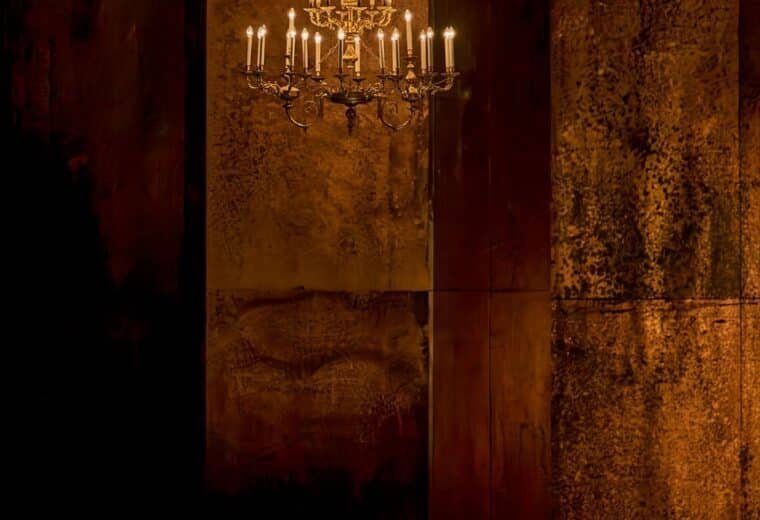
Klaus Mäkelä conducts the Royal Concertgebouw Orchestra in a remarkable evening featuring Schoenberg’s Verklärte Nacht and Mahler’s First Symphony. Mäkelä’s interpretations showcased his dynamic range and emotional depth, leaving a powerful impression on the audience.

(C) Eduardus Lee
September, 19, 2024
Het Concertgebouw
PROGRAM:
SCHOENBERG, Verklärte nacht
Schoenberg’s Verklärte Nacht: A Journey Through Darkness and Redemption
Celebrating the 150th anniversary of Arnold Schoenberg’s birth… Often celebrated as the pioneer of atonality, Schoenberg composed Verklärte Nacht (Transfigured Night) in 1899. This piece, inspired by Richard Dehmel’s eponymous poem, is a profound exploration of emotional turmoil and ultimate redemption. Schoenberg himself once remarked, “I have always thought that music should express something, something human.” Verklärte Nacht embodies this belief, as it musically narrates a story of love, guilt, and forgiveness, moving from darkness to a luminous resolution.
Klaus Mäkelä conducts the Royal Concertgebouw Orchestra in a performance that delves deep into the dark, introspective qualities of the piece. Conducting without a score, he showcases a physicality that channels the very energy of the music. His approach alternates between delicate nuances and frenzied intensity, drawing out the orchestra’s signature velvety sound and seamlessly transitioning between tender and dramatic textures.
Around the 12-minute mark, the solo cello delivers a particularly poignant passage, a turning point in the narrative that resonates deeply throughout the hall. Mäkelä’s sense of timing is impeccable, allowing the music to breathe within the silences, heightening the tension and underscoring the tragic undercurrents of the piece. Compared to legendary performances by Karajan and Boulez, Mäkelä’s interpretation is more fluid, letting the music unfold naturally while maintaining tight structural integrity.
Technically flawless—both rhythmically and musically—Mäkelä’s interpretation leans toward a restrained emotion, never fully surrendering to the joy that the work ultimately suggests. The shimmering conclusion, with its fine, delicate textures, leaves the audience in a state of contemplative reflection, a testament to the depth and refinement of Mäkelä’s approach.
Gustav Mahler’s First Symphony: The Genesis of a Symphonic Cosmos
Gustav Mahler’s First Symphony, often referred to as the Titan, marks a pivotal moment in the composer’s journey as he establishes himself as a symphonic giant. Composed between 1884 and 1888, this work represents Mahler’s inaugural foray into the symphonic form, where he seamlessly intertwines his profound affinity for nature, his philosophical contemplations, and his innovative orchestral techniques. The symphony underwent numerous revisions before reaching its final form, reflecting Mahler’s meticulous nature and his relentless pursuit of a composition that is at once deeply personal and universally resonant.
Despite these contemplations, Mäkelä’s performance is captivating from beginning to end. He emerges as a true Mahlerian, with an interpretation that is both intellectually engaging and emotionally charged. His ability to energize the audience, coupled with his nuanced understanding of the music, leaves a lasting impression. The anticipation for his forthcoming interpretation of Mahler’s Eighth Symphony in 2025, during the renowned Mahler Festival, is palpable, as it promises to be a monumental occasion in his burgeoning career.
Read also: Mahler at the Concertgebouw — The Chief Conductors Edition · Mahler’s Seventh — Daniel Harding and the Bavarian Radio Symphony Orchestra