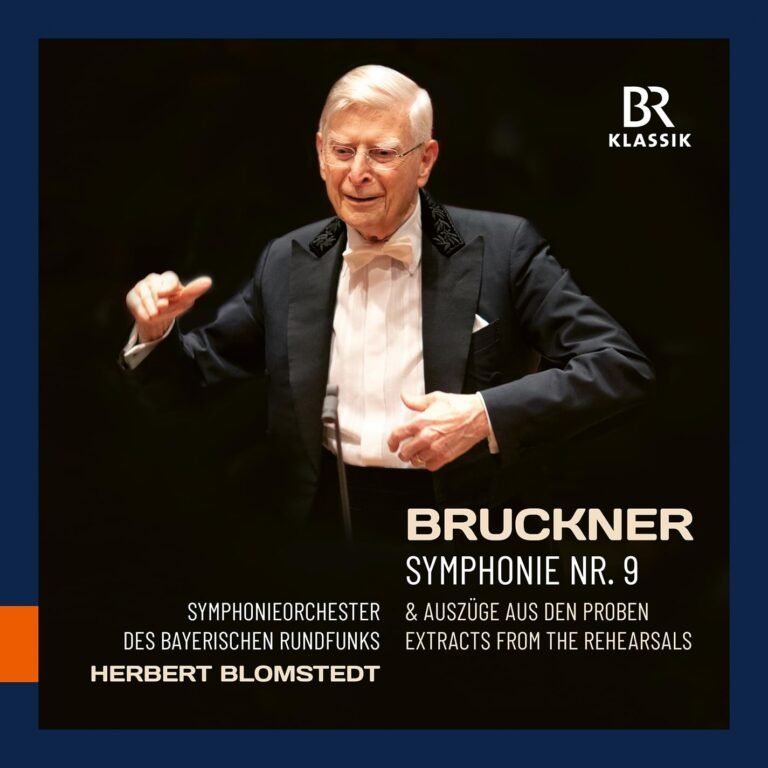
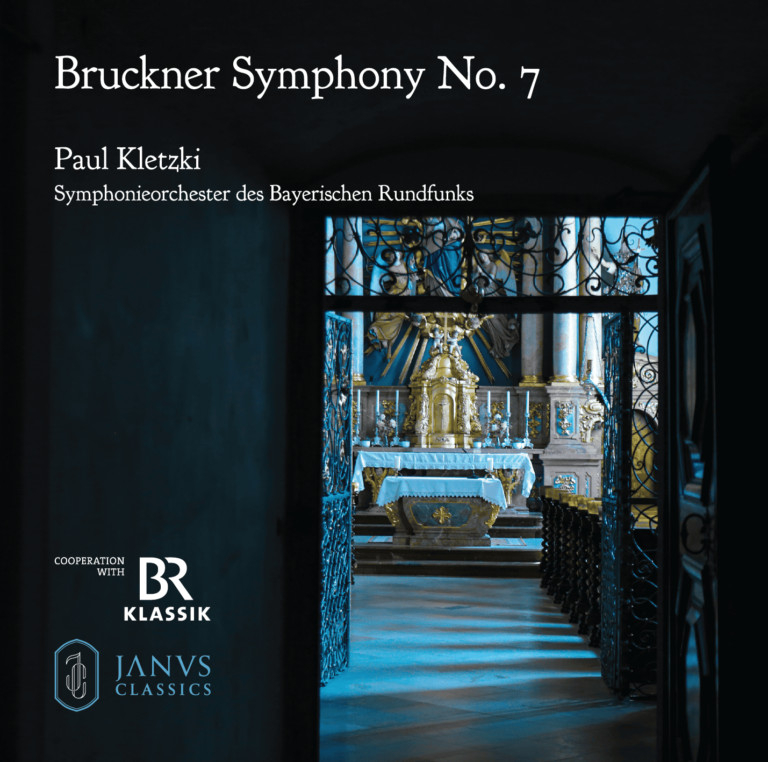
What strikes one at once in Blomstedt’s reading with the Bavarian Radio Symphony Orchestra is the color. It is darker, and the recording is perhaps more muffled, which is no doubt due to the venue, the Philharmonie im Gasteig, whose acoustics have long been criticized. What we hear is a rather monumental, rather impressive vision. There is even a sense of the epic, or at least a narrative coloring, and an admirable sense of legato. But around the eleventh minute a few heavy patches can be noted, and, surprisingly, what catches the ear is that everything is very well executed, the orchestra of course deserving every praise, yet without any real edge. There is drive, there is dynamism, but where is the vision? It is a cathedral, but a rather empty one, like the vast, bare churches painted by Saenredam that I remember from the Rijksmuseum in Amsterdam. It would of course be tempting to project the conductor’s religious convictions onto a work in which Catholicism is everywhere present, and we shall not do so. But we are left somewhat frustrated, because this first movement does not take the time to breathe. There is something rather disembodied about it, mineral, somewhat granitic.
The second movement confirms this impression, an orchestra with a very beautiful sound but perhaps a little too well-behaved. If the first movement is granite, this one is obsidian, black, but with a distant blackness. And this is perhaps where the tempi should be compared. Blomstedt is certainly one of the fastest. His first movement takes 23:31 and his Scherzo 10:05, where Abbado in Lucerne takes 26:47 and 11:03.
The third movement is the most emblematic, perhaps the best placed to make clear what I mean. The refusal of pathos is very marked, and indeed this movement is the shortest of all, at 22:55. Between Jochum in Berlin at 27:40, the same Blomstedt in Leipzig at 24:20, Giulini in Vienna at 29:30, not to mention Celibidache in Munich at 30:37, Abbado in Lucerne at 25:16 and Günter Wand at 25:12, here we never linger. That is interesting, because we never hear the gates of the beyond, nothing is dramatized, nothing is spiritualized, yet what we are given has drive, and in that sense it is a rather refreshing vision, one that may well sweep away the last whiff of incense still hanging around Bruckner, so as to bring out nothing but the structure. But was it necessary? There is a kind of mistrust here and, surprisingly, a kind of militancy in wanting to trim the fat off our Bruckner, an almost Boulezian mistrust in the refusal of sensibility, in the determination not to go beyond what the music says. Yet the movement is marked Adagio, langsam, feierlich, and one finds oneself wanting to hold the orchestra back, to ask it to slow down. Fortunately, around the fourth minute, the conductor lets himself go and ventures a lingering tinged with nostalgia rather than melancholy. Between 4:00 and 7:00 comes what is no doubt the most convincing moment, where the conductor draws up a kind of more contemplative reckoning. One is of course spellbound by the finesse of the strings, and it is not only a question of tempo. At 13:00, once again, one would like him to take his time. The orchestra is certainly never caught out. It is powerful, nuanced, dark in color, with the rather distinctive timbre of the Bavarian Radio. It does not linger at 14:55, where the ethereal theme was expected, and so the sublime is missed. This is a choice, the choice of a more telluric, even earthy Bruckner, almost youthful, sometimes light, which does away with all dramatization, with any spiritual option, even any intellectual option. It is the music, and nothing else. There is in fact something of Mozartean clarity in this approach. The heaviness of the opening and the clarity of the end may seem a contradiction, but it is simply what one hears. The last bars are too fast. Once again, perhaps we expect too much of a symphony that takes its time, but by pressing ever forward it leaves us frustrated, all the more so as the conductor recorded a remarkable cycle in Leipzig, and the Ninth may not be the work that suits him best. His Fourth in Leipzig deserved every praise, and not long ago, conducting the Orchestre de Paris in the Eighth, he also gave an anthology-worthy performance.
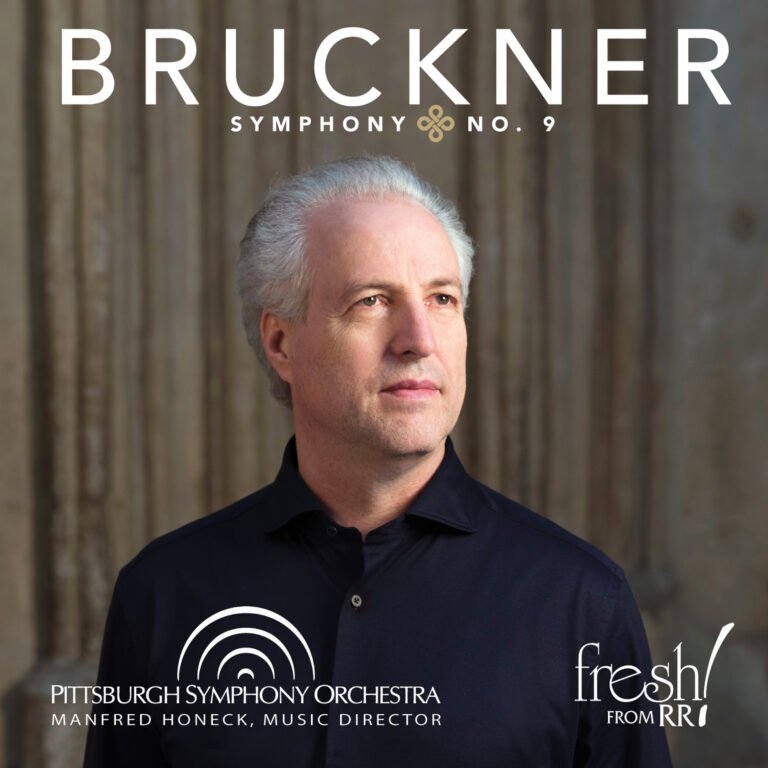
The interest of this release may lie rather in the second disc, devoted to the rehearsals, where one hears the conductor distilling his vision, and that vision precisely confirms what we hear. He is aware of everything, he knows the score. He calls the great dissonance of the Adagio « wie ein Todesschrei, » like a death cry, the summit of the whole symphony, and speaks of a farewell mood, Bruckner’s own « Abschied vom Leben. » Yet in the same breath he asks the violins to « nur andeuten, nicht zu viel, » only suggest, not too much. That is his choice, a kind of restraint, of reserve, without pathos and without ego. But perhaps in this work, the composer’s swan song, we expect commitment, and without going as far as pathos or ego, there is surely a balanced way of making Bruckner resonate, of letting us hear, as Bruckner himself said, what the score does not say. From that point of view, a conductor like Manfred Honeck may today be more convincing in this work.